82 Forest Street
Medford, MA 02155

EXCEPTIONAL CARE, SPECTACULAR SMILES
EXCEPTIONAL CARE, SPECTACULAR SMILES
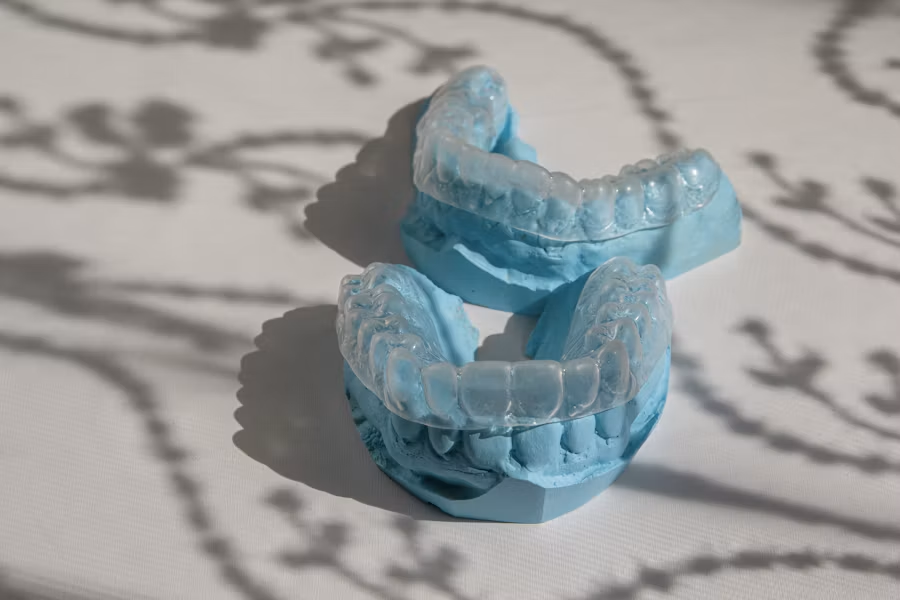
Invisalign attachments are small, tooth-colored shapes bonded temporarily to specific teeth during clear aligner treatment. They give the aligner extra surfaces to grip or push against, which helps an orthodontist control certain tooth movements more precisely than the tray could manage on its own.
An important distinction worth understanding up front is that the aligner is what provides the orthodontic force. The attachment simply helps that force land where it’s supposed to. Invisalign for teens sometimes calls for attachments to manage rotations, difficult tooth movements, bite correction, crowding, or other movements that need more control than a smooth tooth surface allows.
If your teen is starting Invisalign in Medford, MA, or already has attachments on some of their teeth, understanding what these small shapes actually do can make the day-to-day experience a lot less confusing. A Medford orthodontist can explain exactly why they were placed on your teen’s specific teeth.
Attachments are small composite shapes bonded to selected tooth surfaces as part of the orthodontic treatment plan. They’re tooth-colored, temporary, and come in different shapes and sizes depending on the movement they’re meant to support. An orthodontist chooses each attachment’s placement, whether on front teeth, molars, or premolars, based on what that specific tooth needs to do during treatment. Once an attachment has done its job, it’s removed.
Attachments and buttons aren’t the same thing, even though they can look similar to an untrained eye. Buttons are a separate orthodontic component, most often used as an anchor point for elastics. The two shouldn’t be used interchangeably.
A smooth tooth doesn’t give an aligner much to hold onto. For straightforward movements, that’s not a problem. The tray itself provides enough control. But for more complex movements, the aligner needs a better surface to push against, and that’s where Invisalign attachments come in.
The sequence works like this: the attachment gives the aligner a defined shape to engage; that aligner engagement creates directional force against the shape, and the tooth moves the way the treatment plan intends. Without that extra point of contact, some movements simply wouldn’t track as predictably.
Attachments are made from a tooth-colored dental composite bonded directly to the enamel. They aren’t drilled into the tooth, and they aren’t brackets. They stay in place even when the aligner tray comes out for meals or brushing, and their shade is chosen to blend in with the surrounding tooth. That said, blending in isn’t the same as disappearing entirely. They’re still a physical shape on the tooth surface.
No. Traditional braces use a bracket connected to an archwire, and that combination is what moves teeth. Invisalign works differently: a removable aligner does the moving, and an attachment, when needed, simply improves how well that aligner grips a specific tooth. Attachments never connect to a wire. They’re part of a removable system, not a fixed one.
Attachments aren’t handed out because someone is a teenager starting Invisalign. They’re prescribed based on the movement a specific tooth needs to make. When a tooth requires more precise control than a smooth aligner surface can provide on its own, an orthodontist adds an attachment to give the tray something more useful to engage.
Rotation is different from a tooth simply sitting too far forward or back. In tooth rotation, a tooth has turned around its own long axis rather than tipping in one direction. Round tooth shapes in particular can be harder for an aligner to control rotationally. An attachment gives the tray an additional point of contact, something with an actual edge or surface to push against rather than a smooth curve that tends to slip.
This kind of rotational movement matters most for teens dealing with crooked or rotated teeth. Better aligner control at this stage often makes the difference between a tooth that tracks on schedule and one that lags behind the rest of the plan. A future article in this series will take a closer look at Invisalign for rotated teeth and what treatment involves in more complex rotation cases.
Two terms come up here that are worth defining plainly. Invisalign extrusion means moving a tooth farther out of the gum line, into better position within the arch. Invisalign intrusion means the opposite: moving a tooth further up, toward the supporting tissue, so it sits less prominently.
Both are examples of vertical tooth movement, and both tend to need more control than side-to-side tipping does. An aligner alone has a harder time gripping a tooth well enough to pull it down or push it up predictably, which is why an attachment is often added to support this kind of orthodontic tooth movement.
Orthodontic treatment isn’t only about where the visible crown of a tooth ends up. The angle of a tooth, a movement sometimes called tipping, may need adjustment as part of overall tooth angulation: improving alignment, how space is distributed across the arch, the bite, and the tooth’s final position. Root control plays into this too, since where the root sits underneath the gum line affects how stable the final result is.
Invisalign can influence tooth angulation meaningfully, but it isn’t able to produce every type of movement a tooth might theoretically need. That’s part of what an orthodontist evaluates before finalizing a treatment plan.
Crowded teeth often need more than one kind of correction at once: rotation, alignment, and controlled movement into space that doesn’t exist yet but will as treatment progresses. As those teeth shift, some may also need to angle slightly differently to settle into their new positions without relapsing later. Attachments are frequently part of an Invisalign plan built around crowding, since they give the aligner more consistent grip across several teeth that are all moving in coordinated ways, rather than relying on tray pressure alone.
If your teen’s case involves significant crowding, Invisalign for crowded teeth is worth reading for a fuller look at how clear aligners approach that specific problem and where the limits are.
Attachments can also play a role in movements tied to correcting how the upper and lower teeth meet, including overbite, crossbite, open bite, and other bite relationships. The mechanics are similar to what supports tooth-level movement: better grip means more predictable force in the direction the bite needs to shift.
For a closer look at what Invisalign can and can’t do for a teen’s bite specifically, see Invisalign for teen bite problems.
No. Whether a teen needs attachments, and how many, depends on several factors. These include where their teeth started, the type of movement required, how complex the overall case is, the bite relationship involved, the treatment goals, and how the aligner series itself is designed. Some teens finish treatment with very few attachments. Others need quite a few. Neither situation is unusual, and there’s no meaningful “average” to compare against.
Think about it this way. A case involving mostly minor alignment, with few complex movements required, will typically call for fewer attachments simply because there’s less that needs extra control. A case involving multiple rotations and bite correction at the same time needs more control across more teeth, so more attachments get added to support that plan.
The number itself isn’t a scorecard. It reflects what a specific set of teeth needs, not how “bad” the case is.
No. This is one of the more common worries parents bring up, and the direct answer matters: a higher attachment count is part of how the mechanics were designed from the start. It isn’t evidence that something has gone wrong or that treatment has stalled.
Attachment placement isn’t arbitrary. Where an attachment sits, along with its shape, size, and orientation, is chosen to match the specific movement that tooth needs to make as part of the larger treatment plan.
Before any attachments are placed, the orthodontist works through digital orthodontic planning: mapping where the teeth are now, where they need to end up, and the staged tooth movement connecting those two points. That staged movement becomes the aligner sequence in the Invisalign treatment plan, and the sequence determines exactly which teeth need extra engagement and where. Attachment placement comes directly out of that 3D treatment planning process, as part of the same clear aligner treatment, rather than being decided separately.
Attachment shapes vary because each movement calls for its own kind of mechanical support. A tooth that needs to rotate needs a different amount and direction of force than one moving vertically, so the attachment supporting it is shaped to match. The takeaway for parents is simple: movement drives force, and force drives design.
The process follows a fairly standard sequence. The orthodontic team prepares the tooth surface, positions the composite material precisely, often using a template to keep placement accurate, then bonds and hardens the material in place. It’s a routine part of an Invisalign appointment rather than a separate procedure.
Bonding the attachments itself shouldn’t involve the kind of pressure associated with actual tooth movement. What teens usually notice instead is something more textural: a new shape against the tongue or cheek, a tray that suddenly feels tighter than before, or pressure once the aligner engages the attachment for the first time. That pressure comes from the aligner doing its job, not from the bonding process itself. Talking through that distinction with your teen ahead of time can help set the right expectations.
There’s no set number of days here, and it varies by teen. Most need some adjustment period for removing and reinserting trays around the new shapes, eating with attachments in place, and simply getting used to how they feel against the lips and cheeks. That adjustment tends to ease with repetition rather than all at once.
Aesthetics deserve a straightforward answer rather than an oversold one. Attachments are tooth-colored, but they can still be visible depending on their location, how many are placed, the shade of the surrounding teeth, and even the lighting or distance someone is viewing from. Invisalign attachments on front teeth tend to be more noticeable than ones placed on back teeth, simply because more people are looking directly at that part of the smile.
Clear aligners for teens are still a more discreet orthodontic treatment than traditional metal braces, which is part of why families search for invisible braces in Medford in the first place. But “invisible” is a bit of a stretch as a factual description, especially once attachments come into the picture. Think of it more as discreet than undetectable.
Location is the main factor. Front teeth sit at the center of most people’s line of sight when someone smiles or talks, so attachments placed there naturally draw more attention than ones on molars or premolars, which are largely out of view during normal conversation.
Like most dental materials, the area around an attachment can be affected by strongly pigmented foods and drinks or by inconsistent oral hygiene. Keeping up with regular brushing and flossing helps keep that area looking as close to the surrounding tooth color as possible throughout treatment.
Here’s the key distinction: aligners come out for meals, but attachments stay bonded to the teeth the whole time. So teens can generally keep eating the way they normally would, as long as they follow the practice’s dietary guidance and avoid habits that could damage the bonded material.
Attachments are bonded securely, but that doesn’t make them indestructible. They can occasionally loosen or chip, particularly with very hard or sticky foods. Following the dietary guidance your teen’s orthodontic team provides is the most reliable way to avoid that kind of damage.
Brushing needs a bit more attention once attachments are in the picture. Teens should brush carefully around the margins of each attachment, work to remove any plaque that builds up around the composite, floss as usual, and keep up with regular dental visits. For more detail on building this into a daily routine, see our guide to daily Invisalign care.
Once an attachment gives the aligner something firmer to grip, that improved engagement can translate into a stronger sense of pressure for the teen wearing it. That doesn’t automatically mean something is wrong. It’s often just a sign the attachment is doing exactly what it was designed to do.
The tray has to disengage from each attachment’s shape when it comes out, which can make removal feel less smooth than it did before attachments were placed. Teens should stick with whatever removal technique their orthodontic team demonstrated rather than forcing the tray out in a way that risks damage to the attachment or the tray itself.
Yes, when an orthodontist recommends them. Attachments depend on the tray fully engaging their shape to work as intended, and sometimes a tray needs extra help settling completely into place. Chewies can support that seating process. For more on how these work, read Invisalign chewies and why an orthodontist might recommend them.
Attachment loss happens sometimes, and on its own, it doesn’t mean treatment has failed. What matters is what happens next: contact the orthodontic office rather than waiting to see if it resolves on its own.
A few signs tend to show up: a bump that was there before suddenly isn’t, a visible gap where the attachment used to sit, the aligner feeling different against that tooth, or a space visible inside the tray itself. There’s no need for daily inspection here. Most teens notice naturally when something feels off.
There’s no single answer that applies to every case. The right move is to contact the orthodontist for guidance specific to that teen’s treatment plan. Deciding independently whether to keep wearing the current tray, skip ahead, or pause isn’t something to figure out at home.
It depends on which attachment came off, what movement it was supporting, what stage of treatment the teen is in, and how quickly the situation gets addressed. There’s no guarantee either way, which is exactly why a prompt call to the office matters more than trying to predict the outcome at home.
When an attachment is fully engaged and the aligner is being worn and seated correctly, that combination supports the planned tracking the treatment plan was built around. When any part of that chain breaks down, tracking can start to slip.
A visible gap can develop between the tray and the tooth, the planned movement can become less predictable, and the orthodontist may need to evaluate what’s going on at the next visit. Chewies might be recommended to help with seating, and in some cases the treatment plan itself may need a small adjustment.
Sometimes, though not automatically. When a planned movement doesn’t fully complete because of an engagement issue, that can be one of several factors contributing to the need for Invisalign refinements later in treatment. It’s one piece of a larger picture the orthodontist reviews during progress evaluations, not a guaranteed outcome.
Some treatment plans use both tools together, and it helps to understand what each one is actually doing. Attachments improve how well the aligner controls individual teeth. Elastics add force between the upper and lower arches to help coordinate the bite. They work toward different goals, even when they show up in the same treatment plan. For a full look at when and why elastics come into play, see Invisalign elastics for teens.
Attachments come off once they’re no longer needed, which for some teens happens near the end of active treatment and for others happens earlier if the plan changes along the way. Not every attachment necessarily stays in place until the very last tray.
Attachments are designed to be temporary from the start, and removal is handled professionally rather than left to guesswork. It wouldn’t be accurate to promise zero effect on the tooth surface whatsoever. Professional removal is specifically intended to minimize any impact, which is exactly why it should never be attempted at home.
Yes, if the orthodontist determines that additional movements are needed during a refinement phase, attachment configurations can change to support that updated plan. This is a normal part of how Invisalign refinements work when a case needs more fine-tuning than originally expected.
Every teen’s attachment configuration looks a little different, because it’s built around what that teen’s specific teeth need to move, not a standard template applied across every case. Successful Invisalign for teens depends on accurate planning up front and close monitoring throughout, and whether attachments are part of that plan is something only an orthodontic evaluation can determine.
The Medford Center for Orthodontics and Pediatric Dentistry works with families across Medford to build treatment plans around each teen’s actual bite and tooth positions, attachments included when they’re genuinely needed. If your teen is starting Invisalign in Medford, MA, or already has questions about the attachments on their teeth, our team can walk you through exactly why each one is there. Schedule a visit with our Medford orthodontist to talk through what your teen’s plan involves.
No. Whether a teen needs attachments depends on the specific movements their treatment plan requires, not on the fact that they’re a teenager starting Invisalign.
More complex cases, involving multiple rotations, bite correction, or other difficult movements, tend to need more attachments to give the aligner enough control. A higher number reflects the movements required, not the severity of the case in a way that should cause concern.
Bonding them shouldn’t hurt. Teens may feel some pressure once the aligner engages the attachment, which is a normal part of how the mechanics work rather than a sign of a problem.
They can be, particularly on front teeth or in certain lighting. They’re tooth-colored and designed to blend in, but they aren’t invisible.
Yes, generally. Aligners come out for meals, and attachments stay on the teeth, so eating continues largely as usual within the orthodontist’s dietary guidance.
Yes, this happens occasionally and isn’t automatically a sign of a bigger problem.
Contact the orthodontic office for guidance specific to your teen’s treatment plan rather than deciding independently how to proceed.
Attachments aren’t primarily about speed. They’re about giving the aligner enough control over a specific movement to keep treatment tracking as planned.
Often, yes. Rotated teeth and crowded cases frequently need the extra engagement an attachment provides, though the exact need depends on the individual case.
Yes. Some treatment plans use both, since they support different goals: attachments for individual tooth control, elastics for coordinating the bite between arches.
The Medford Center for Orthodontics and Pediatric Dentistry provides Invisalign treatment for teens in Medford, MA, including individualized planning around attachments when a case calls for them.
